

Skincare technology has made it easier to explore treatments that were once primarily associated with professional settings. LED light therapy is one example. Instead of relying on scrubs, acids, or physical exfoliation, LED devices use specific wavelengths of light as part of a skincare routine. Facial masks designed for home use have become especially popular because they offer a hands-free way to incorporate light-based treatments into everyday self-care.
However, not every LED mask offers the same technology, coverage, or treatment options. Understanding the differences between red, blue, and near-infrared light can help consumers make more informed decisions. It is equally important to understand the limitations of at-home devices, follow the manufacturer’s instructions, and maintain realistic expectations.
What Is LED Light Therapy?
LED stands for light-emitting diode. In skincare devices, LEDs produce light at selected wavelengths that interact with the skin. Unlike ultraviolet (UV) light, LED skincare treatments do not rely on UV exposure.
Different wavelengths are used for different purposes. Red light is commonly associated with the appearance of fine lines and skin texture, while blue light is frequently used in devices designed for blemish-prone skin. Near-infrared light is another option found in some advanced devices.
LED treatments are non-invasive, but that does not mean every device is suitable for every person. Results can vary depending on the device, its technical specifications, the user’s skin, and consistency of use. The American Academy of Dermatology explains that some at-home red-light devices may offer modest improvements in certain visible signs of aging, although more research is needed to understand their long-term effectiveness.
Understanding the Different LED Light Wavelengths
One of the most useful things to check when comparing LED masks is the wavelength information. A product description that simply says red or blue light does not tell the complete story. Wavelengths are measured in nanometers (nm), and different ranges interact with skin in different ways.
Red Light for the Appearance of Fine Lines
Red light is commonly included in skincare devices designed to address visible signs of aging. It is associated with photobiomodulation, a process in which light energy interacts with cells and may influence biological activity.
In skincare discussions, red light is often associated with the appearance of fine lines, uneven texture, and skin firmness. It should not be treated as a guaranteed replacement for established dermatological treatments or a substitute for professional advice.
Near-Infrared Light for Complementary Skin Support
Near-infrared light is not visible to the human eye and uses wavelengths longer than visible red light. Some LED devices combine near-infrared with red light to provide more than one type of light exposure during a treatment.
The combination is intended to complement the device’s overall treatment approach. Consumers should look for clearly stated wavelength specifications rather than relying only on broad marketing descriptions.
Blue Light for Blemish-Prone Skin
Blue light is commonly used in LED devices designed for acne-related skincare concerns. Certain blue-light wavelengths have been studied for their interaction with acne-associated bacteria.
It is important to remember that acne has several contributing factors, including excess oil, clogged pores, inflammation, and hormonal changes. An at-home LED device may be one part of a skincare approach, but persistent or severe acne may require a dermatologist’s assessment.
What to Look for When Choosing an At-Home LED Mask
A good purchasing decision starts with the device’s specifications rather than its appearance or promotional claims. Two masks can look similar while offering different levels of coverage, light options, comfort, and control.
Consider these features before choosing a device:
- Wavelength transparency: Look for specific wavelength measurements, not just general descriptions such as red-light technology.
- LED coverage: Check how the LEDs are distributed and whether the device is designed to cover the full face.
- Intensity settings: Adjustable levels can offer more control over the treatment experience.
- Fit and materials: Flexible materials and an adjustable design may make a mask more comfortable to wear.
- Eye protection: Check the device’s eye-safety features and follow all instructions about positioning and use.
- Cleaning and storage: A surface that can be cleaned easily and suitable storage accessories can make regular maintenance simpler.
A device should also provide understandable instructions, technical information, and customer support. If important specifications are missing, it may be worth comparing other options before purchasing.
Exploring the Features of the PMD LED Mask
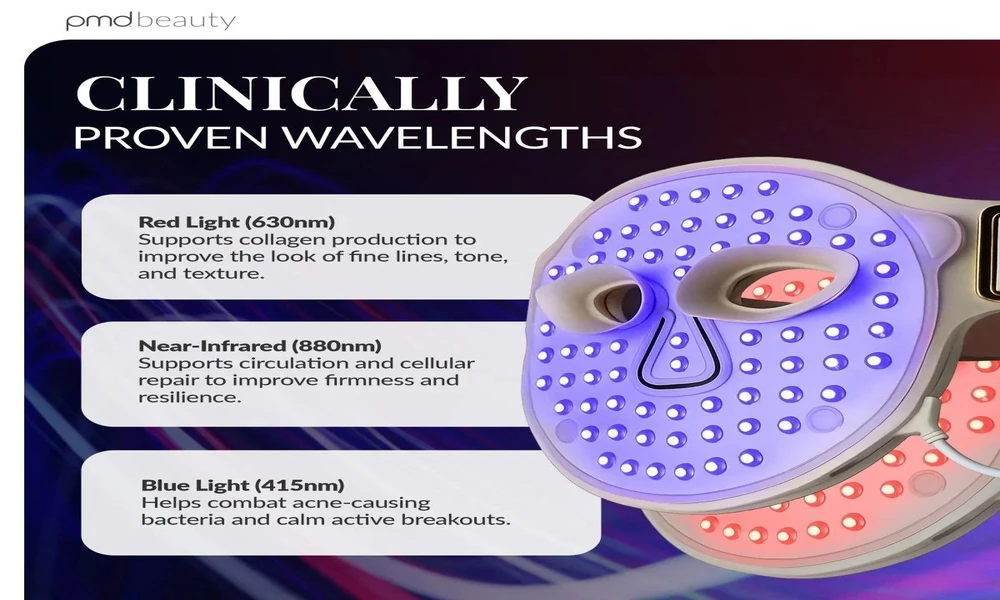
Consumers comparing different at-home devices may come across the pmd led mask, which combines red, near-infrared, and blue light technology in a flexible facial design.
According to its product information, the device uses 201 medical LEDs arranged across 67 light zones. Its listed wavelengths include 630nm red light, 880nm near-infrared light, and 415nm blue light. This combination gives users access to different light modes within one device.
The mask also features three adjustable intensity levels. Its flexible silicone construction is designed to fit the face, while the hands-free headband allows users to wear it without holding the device in position. Built-in eye protection, a rechargeable controller, and storage accessories are additional features listed by the manufacturer.
The product’s treatment process is designed around a 10-minute session. Users place the mask on their face, connect the controller, select a light mode, adjust the intensity, and begin the session according to the supplied instructions.
These specifications are useful points of comparison, but product features should not be confused with guaranteed individual results. Anyone considering a light-based skincare device should assess whether its features and intended use are appropriate for their needs.
How to Incorporate LED Light Therapy Into a Skincare Routine
A consistent routine is generally easier to maintain when it is simple. Before using an LED mask, read the complete instruction manual and make sure the device is suitable for your intended use.
A practical routine may include the following steps:
- Cleanse your face: Start with clean skin and remove makeup, sunscreen, and surface impurities.
- Prepare the device: Check that the mask and controller are ready for use and that the device is clean.
- Position the mask: Follow the manufacturer’s instructions for fitting and securing the mask.
- Select the appropriate mode: Choose a setting according to the device instructions and your skincare goals.
- Complete the session: Follow the recommended treatment duration and intensity. Do not extend sessions in an attempt to speed up results.
- Continue with skincare: After treatment, follow your usual routine with suitable moisturizer and daytime sun protection when applicable.
Avoid combining several new skincare treatments at once. Introducing products or devices gradually makes it easier to identify irritation or sensitivity if it occurs.
Safety Considerations Before Using an LED Mask
Although many at-home LED devices are designed for consumer use, precautions still matter. A device’s safety information, instructions, and intended use should always guide how it is used.
The American Academy of Dermatology recommends discussing red-light treatments with a board-certified dermatologist, particularly when a person has a medical condition or concerns that could affect suitability. People with photosensitivity, those taking medications that increase sensitivity to light, and individuals with certain skin conditions should seek professional guidance before starting treatment.
Keep these precautions in mind:
- Follow the exact treatment duration and frequency provided by the manufacturer.
- Do not look directly into LEDs or ignore the device’s eye-protection instructions.
- Stop using the device if you experience persistent discomfort, irritation, or an unexpected reaction.
- Do not use a damaged device, controller, or charging cable.
- Keep the mask clean and store it according to the supplied guidance.
- Consult a dermatologist if you have persistent acne, unexplained skin changes, or a history of light sensitivity.
FDA clearance should also be understood correctly. It is not the same as a guarantee that a device will deliver a particular cosmetic result to every user. Consumers should check the device’s regulatory information and avoid treating marketing language as a promise of clinical outcomes.
How Long Does It Take to Notice Results?
There is no universal timeline for LED skincare treatments. Outcomes depend on the device, treatment settings, skin concerns, and individual response. Some people may notice changes in the appearance of their skin over time, while others may see little difference.
It is better to evaluate a device over a reasonable period while following its recommended schedule than to expect an immediate transformation. Taking occasional photographs in consistent lighting can help users observe gradual changes more objectively.
If a skin concern is worsening or does not respond to an appropriate routine, professional evaluation is a better next step than increasing treatment intensity or frequency without guidance.also read about Why an Eyelash Extension Can Transform Your Beauty Routine
LED Masks and the Bigger Picture of Skincare
LED technology can be an interesting addition to a skincare routine, but it should not replace the fundamentals. Gentle cleansing, appropriate moisturization, daily sun protection, and products selected for individual skin needs remain important.
A balanced approach also means choosing products based on evidence and suitability rather than trends alone. Consumers should be cautious of claims that promise instant results, permanent wrinkle removal, or a complete solution for every skin concern.
An at-home LED mask may appeal to people who value convenience and want to explore light-based skincare technology. Comparing wavelengths, coverage, comfort, safety information, and treatment instructions makes it easier to choose a device with realistic expectations.
Ultimately, the most useful skincare technology is one that fits into a sensible routine, is used correctly, and supports-not replaces-good everyday skin care.
